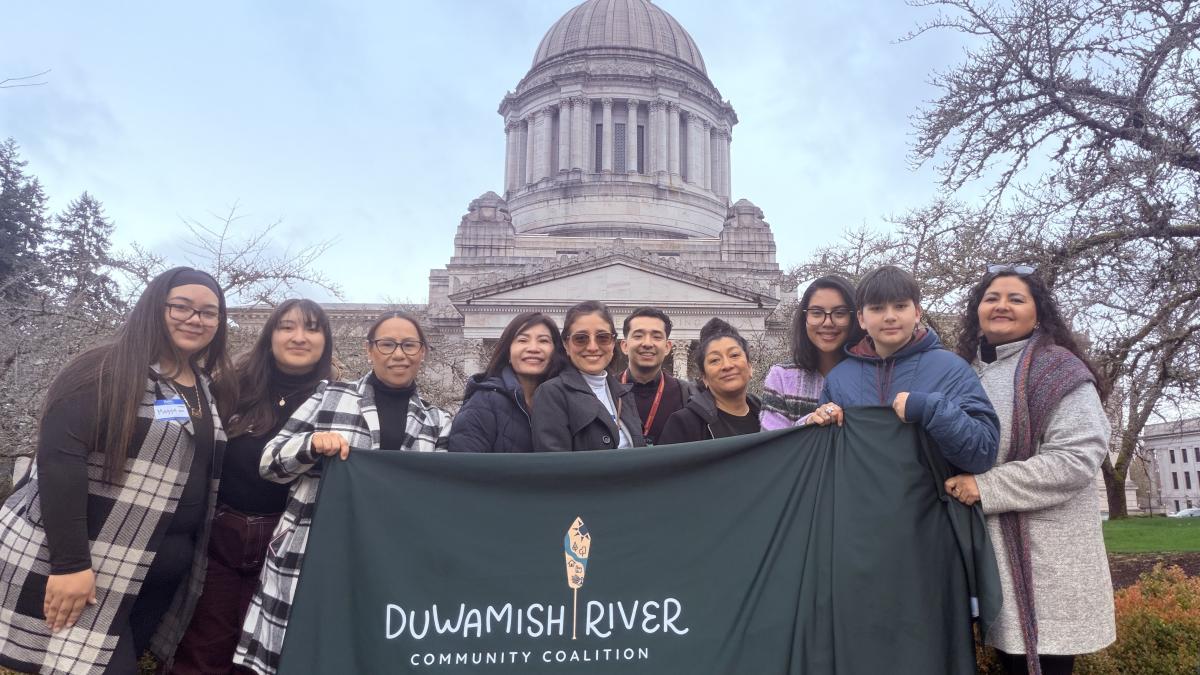
The idea for the Duwamish Air Improvement Study for Youth (DAISY) came directly from community members living in Seattle’s Duwamish Valley. “We knew we had higher levels of hospitalizations from asthma in the Duwamish Valley than in other parts of Seattle,” said Joseph Santana, Environmental Health Equity Manager with the Duwamish River Community Coalition (DRCC). “That’s why we have our Clean Air Program.”
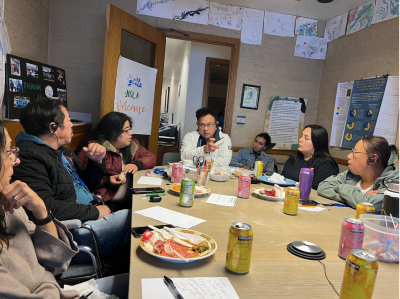
DRCC’s Clean Air Program has four strategies 1. Reduce vehicle emissions, 2. Reduce industrial pollution by advocating for better regulation, 3. Improve indoor air quality, and 4. Improve outdoor air quality through environmental changes like planting trees and constructing greenwalls.
“For the third strategy we needed to understand more about the asthma situation,” said Santana.
Making Connections
Paulina López, DRCC’s Executive Director credits BJ Cummings, the former manager of community engagement for the University of Washington (UW) Interdisciplinary Center for Exposures, Diseases, Genomics & Environment (EDGE), with getting the DAISY project off the ground. “I have always been very vocal about the need to understand whether we are making a difference with our healthy homes assessments,” said López. “DAISY was in response to a discussion with BJ about that.”
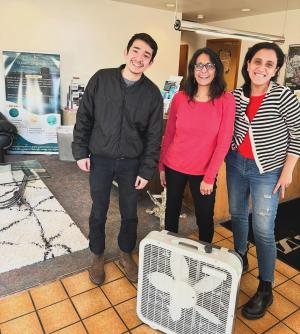
Cummings connected the DRCC team to Anjum Hajat, an EDGE member and associate professor in UW’s Department of Epidemiology. “BJ sent me an e-mail out of the blue asking if I’d be interested in meeting with folks from DRCC to learn about their research interests,” recalled Hajat. Hajat met with López and her team for about six months to discuss ideas and ultimately ended up deciding to evaluate the impact of low-cost box fan air cleaners on asthma outcomes in children as one component of their project. DRCC had been distributing box fan air cleaners to Duwamish Valley households as part of their healthy homes program.
“To my knowledge, no other studies had looked at the effects of box fan filters on asthma,” said Hajat. “Other studies had looked at HEPA air purifiers, but they might not be realistic for low-income families.”
Getting Funded
The team applied for a four-year “research to action” grant from the National Institute of Environmental Health Sciences to evaluate whether the low-cost air cleaners reduced symptoms of asthma in children. When they weren’t funded they didn’t give up, but continued to work together to refine the proposal.
López and Hajat also participated in a community-engaged training at the University of Michigan designed to “get community members thinking about research and get researchers thinking about community” according to Hajat. “We spent so many meaningful days working together, it was a wonderful thing to create community participatory research,” said López. “We also got to meet other like-minded community members and researchers wanting to do the same.”
Eventually, the team was awarded a different grant from the National Institute of Environmental Health Sciences and received more money than they had originally sought for a project that will run for five years.
Community Empowerment
From the start, community empowerment has been a top priority for the project. The research team created a Community Team to engage community members with all phases of the work. Early on the Community Team helped decide where to place air monitors to measure air quality at strategic locations in the Duwamish Valley where gaps occurred in the existing network of government air monitors.
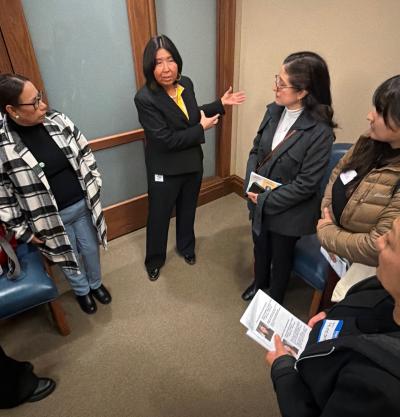
The research team also educates community members about how government works at the local, county, state and federal levels. Community members learn everything from the basics of civics to the complexities of Seattle’s comprehensive plan, a city initiative that may have real impacts for the Duwamish Valley. “I’m super happy about this civic educational experience for people who’ve never had it before,” said Santana.
“Ultimately, the goal is for people to use information gathered from the air monitor network to improve health at the individual or systems level,” said Paulina, “That’s what we’re always moving towards.”
Progress to Date
Now in its fourth year, the team is busy analyzing results from a full year of air monitoring and deciding how best to communicate results to community with input from the Community Team. Close to 20 families of children with asthma have been enrolled in the study to test the low-cost box fan filter intervention, and the research team hopes to recruit about 60 more. DRCC leads the recruitment process, working through local elementary schools, radio stations, food banks, social media, word of mouth and collaboration with Sea Mar, a local community health clinic. “I never would have attempted recruitment without our community partners,” said Hajat. “Without people on the ground there would have been no way to recruit effectively.”
“A lot of positives are coming,” says López about the progress so far. “We’re bringing greater attention to an issue that deeply affects our community, and we’ve seen a real growth in knowledge, empowerment, and collective capacity. I also want to highlight what an incredible partner my research co-PI, Dr. Anjum Hajat, has been. She’s earned a strong level of trust within the community, which has been essential to this work.”