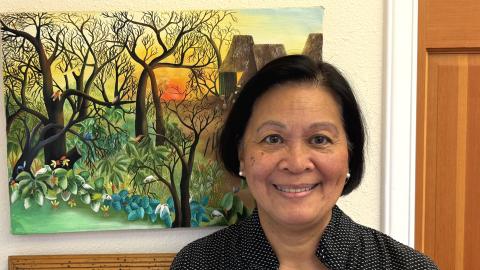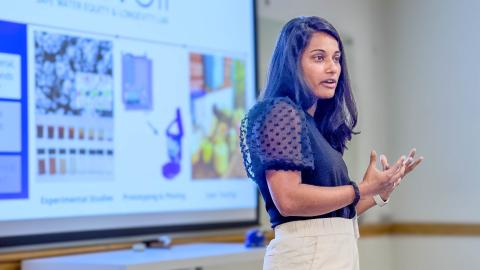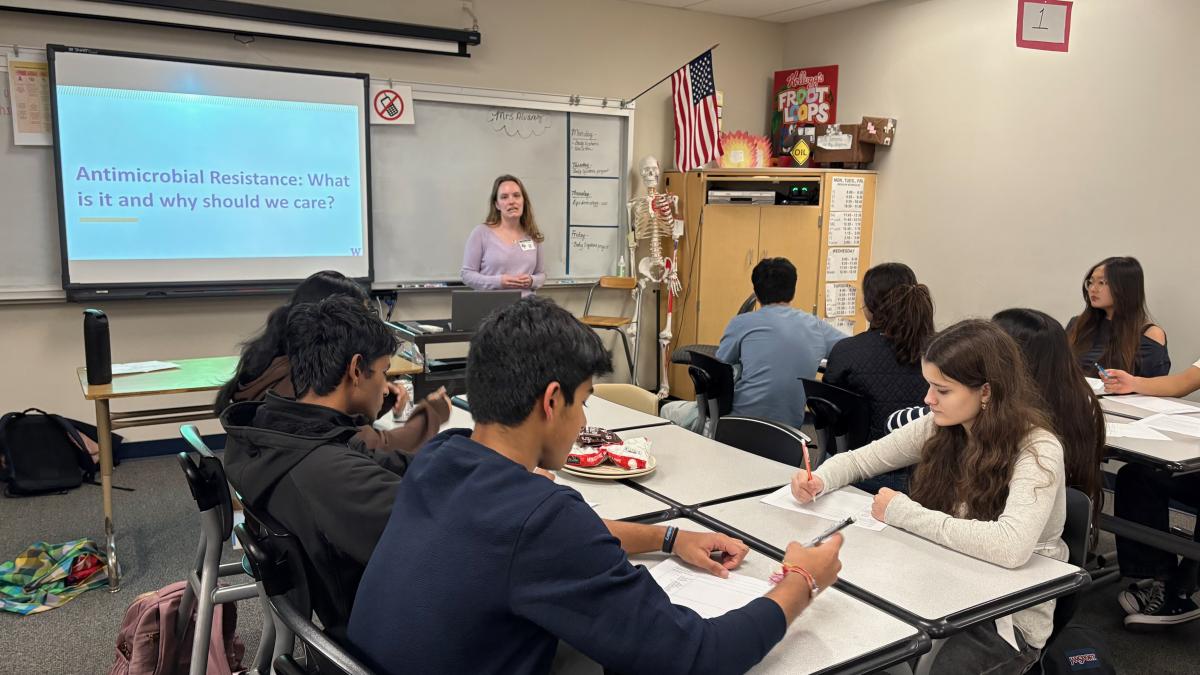
In January, Hilary McLeland-Wieser visited a high school health class taught by Lindzee Alvarez bearing bags of mini marshmallows and M&Ms. McLeland-Wieser is a PhD student in the UW Department of Environmental and Occupational Health Sciences (DEOHS) and Alvarez is a long-time partner of the University of Washinton (UW) Interdisciplinary Center for Exposures, Diseases, Genomics & Environment (EDGE) and member of its Community Advisory Board. McLeland-Wieser described her career path as an epidemiologist for students and then led a lesson she helped developed with Erica Fuhrmeister, an assistant professor in DEOHS and Civil and Environmental Engineering, to teach high school students about the importance of antimicrobial resistance.
Antimicrobial resistance
Antimicrobial drugs (drugs designed to kill microbes like bacteria, fungi and viruses) save millions of lives every year. Over time, however, some microbes develop resistance to the antimicrobial drugs that we use to kill them. This can result in infections that are very hard or impossible to treat and may cause death. The U.S. Centers for Disease Control and Prevention (CDC) estimates that almost five million people died globally in 2019 from causes related to antimicrobial resistance and that the problem only worsened during the COVID 19 pandemic. The World Health Organization identifies antimicrobial resistance as a top threat to public health.
“Antimicrobial resistance is a really multifaceted problem,” said McLeland-Wieser, “agriculture and veterinary medicine and human medicine and environmental contamination are all considerations. That’s what first got me interested in it—the need to look at it in a more integrated perspective than just human health.”
Public education
Educating the public about antimicrobial resistance is important because everyday behaviors can help stop the spread of antimicrobial resistant organisms. Simple things like regular hand washing to reduce infection and avoiding the overuse of antimicrobial drugs can help keep the problem in check. It’s also important not to take anti-bacterial medicine to combat a virus, like those that cause the common cold. The antimicrobial drug won’t target the virus, but may instead due damage to healthy gut bacteria and create an environment where harmful bacteria can develop antimicrobial resistance.
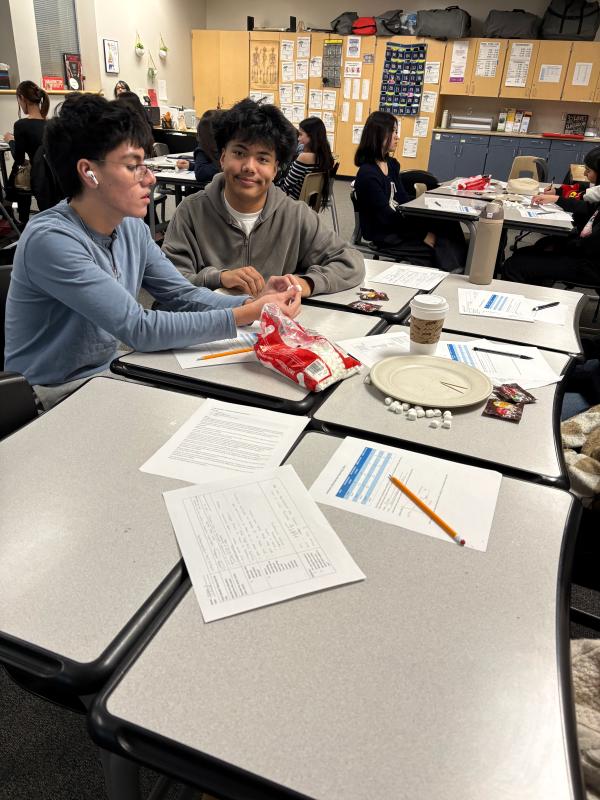
McLeland-Wieser and Fuhrmeister used a community engagement supplement as part of an EDGE pilot grant to develop a lesson that featured an activity adapted from a lesson first developed by Heather Kittredge when she was a graduate student at Michigan State University. In it, students spear mini marshmallows representing pathogens with a toothpick representing an antimicrobial drug. In between rounds of pathogen “replication” an M&M is introduced, representing a mutation that confers resistance to the antimicrobial drug. Over a few courses of replication, students watch the proportion of “AMR pathogens” (M&Ms) rise in the population, mimicking how evolution works to create AMR “superbugs.”
“The hands-on components made complex scientific concepts easier to grasp and sparked thoughtful discussion,” said Alvarez. “Students left with a stronger understanding of why responsible antibiotic use is so important in healthcare.”
Sharing the lesson broadly
Over the summer McLeland-Wieser worked with the EDGE Community Engagement Core to create a short video tutorial about the lesson to share on the website of the Washington Office of Superintendent of Public Instruction (OSPI) along with the teaching modules she and Fuhrmeister developed. OSPI staff helped align the module with Washington teaching standards and make it freely available as an open educational resource.
McLeland-Wieser is advised by EDGE member Peter Rabinowitz, a professor in DEOHS. Currently she is developing an integrated database of human clinical samples, veterinary samples and environmental surveillance samples. “The end goal is to be able to use this database to comprehensively look at trends in antimicrobial resistance over time and space for various different pathogens.”
It’s not work that relates directly to her work with Fuhrmeister on the EDGE pilot project, but she said she appreciates having the opportunity to interact with high schoolers about antimicrobial resistance. “I was surprised by how excited some of the kids were about it. They were really gung-ho.”
- Community Engagement
- ATHENA