Having lived in the same place for countless generations, studying the relationships among local geography, wildlife, and humans, Indigenous communities hold a wealth of knowledge about ecological and environmental health. Partnerships with academic researchers and the exchange of knowledges can be mutually beneficial; however such partnerships must be enacted with a clear understanding of the legacy of harmful research conducted by academics and a commitment to avoid perpetrating such harms by educating oneself about the importance of Indigenous data sovereignty.
Indigenous data sovereignty is the right of Tribes to govern the collection, ownership, interpretation, application and dissemination of data about their own communities, lands and traditions. Ideally, Tribal and academic partners agree on access and rights of use to any data shared or generated at the outset of a project with a data sovereignty agreement.
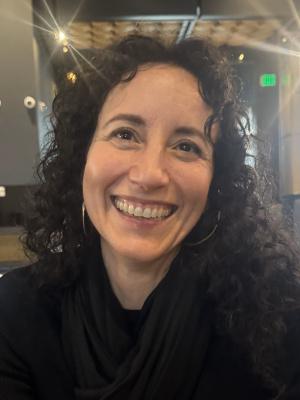
Unfortunately, such agreements are not the norm within academia. When Jamie Donatuto came to the University of Washington (UW) in 2025 after working with the Swinomish Indian Tribal Community for 25 years, she was surprised by how rare Indigenous data sovereignty agreements were. “I realized that there are many researchers working with Tribes who have never even heard of a data sovereignty agreement, which floored me,” said Donatuto, who is a clinical associate professor in the UW Department of Environmental and Occupational Health Sciences and Co-Director of the UW Interdisciplinary Center for Exposures, Diseases, Genomics & Environment (EDGE)’s Community Engagement Core. “I have talked to some who just don't think they're necessary, and what I realized was that they're not well-recognized within academia.”
The tool
Donatuto decided to create an Indigenous data sovereignty agreement template for use by any UW researcher working with Tribal partners. “The point was to create more of a kitchen sink-style template so that the Tribe or Tribal organization could decide what they wanted in it and what they didn’t want in it,” said Donatuto. It borrows heavily from the Northwest Indian College’s template, written by Dr. William Freeman, who is now retired.
“It is very Western in its nature, I’ll say that right off the bat. There are a lot of legal terms in it,” said Donatuto. It reflects the OCAP [Ownership, Control, Access and Partnership] Principles and the CARE [Collective Benefit, Authority to Control, Responsibility and Ethics] Principles.
The tool serves a similar function to EDGE’s Model Community Partnership Agreement, with the important difference that the Indigenous data sovereignty agreement template has more legal obligations since Tribes are sovereign nations.
UW’s new Indigenous data sovereignty agreement template was released in the summer of 2026 and has been pre-approved by UW's Office of Sponsored Programs to be used by anyone at UW who is working with a Tribe. Donatuto worked with Sarah Guthu, senior proposal development officer with UW’s Strategic Initiatives Office, and Macie Owens, senior contract specialist with UW’s Office of Sponsored Programs, to finalize the template.
The goal
“In the big picture,” said Donatuto, “the purpose is to protect proprietary data. And the way that Indigenous communities define data and materials and sovereignty is sometimes very different than the way that academic researchers do.” The Indigenous data sovereignty agreement ensures that the definitions and implementation of each critical element are clear and agreed upon.
“It’s really important to be clear about what you’re collecting, what you’re going to do with it, who owns it, and perpetuity,” said Donatuto. “Even if you’re just creating a poster for a conference, it’s important to ask yourself what data you’re sharing and whether you’re allowed to share it.”
H3: Who it is for
Ideally, the template is used by academic researchers—students, staff or faculty—at the outset of an engagement with a Tribe or Tribal organization if the Tribe does not have its own template. Researchers and Tribal representatives fill out the template together and then submit it to the Tribal organization’s legal team for review. Review can take months and must be completed before any data sharing or collection commences. “This is all part of the trust-building exercise,” said Donatuto, “which is necessary before any data or project is initiated.”
If you are already working with a Tribe, but lack an Indigenous data sovereignty agreement, it’s not too late. “In my point of view, even if you had strong research relationships with a Tribe for 20 years, bringing forward the idea of collaboratively creating and enacting a data sovereignty agreement demonstrates trust and understanding of the responsibility that an academic researcher takes on when working with Indigenous data,” said Donatuto.
What it includes
Indigenous data goes well beyond human-subjects data, encompassing ecological data, physical data, maps, human-made materials, photographs, stories and medical data. “The type of data we’re talking about is important because there are many people who believe that collecting environmental data couldn’t possibly be something that should be part of a data sovereignty agreement or part of an institutional review board, but not all Tribes agree with that. In fact, many don’t,” said Donatuto.
While the Indigenous data sovereignty agreement template doesn’t address institutional review boards (IRBs) directly, Donatuto emphasizes that it is the responsibility of the academic researcher to establish whether a Tribal organization has an IRB and to go through it if it does. There are precedents, particularly at some universities, for the university to defer to a Tribal IRB.
Learn more:
Learn more about the tool by attending a webinar featuring Donatuto to be co-hosted by the EDGE Center and the Center for Disaster Resilient Communities on January 12, 2027 at 10:00 AM Pacific Time.
Citations and additional resources:
Carroll, S. R., Garba, I., Figueroa-Rodríguez, O. L., Holbrook, J., Lovett, R., Materechera, S., Parsons, M., Raseroka, K., Rodríguez-Lonebear, D., Rowe, R., Sara, R., Walker, J. D., Anderson, J., & Hudson, M. (2020). The CARE Principles for Indigenous Data Governance. Data Science Journal, 19(1), 43. https://doi.org/10.5334/dsj-2020-043
First Nations Information Governance Centre. (2014). Ownership, Control, Access and Possession (OCAP™): The Path to First Nations Information Governance. Ottawa: FNIGC.
Freeland, P. A. (2025). Tiered Sovereign Data Framework: Indigenous Data Sovereignty Standard (Version 0.9.8) [Computer software / standard]. Affiliated Tribes of Northwest Indians. https://github.com/atniclimate/TieredSovereignDataFramework
- Community Engagement
- Native Environmental Health